




Hey there! As a supplier of Membrane Filter CA, I often get asked whether this type of membrane filter is suitable for filtering biological samples. Well, let's dive right into it and figure out if CA Membrane Filter is the right choice for your biological filtration needs.
First off, let's talk a bit about what Membrane Filter CA actually is. CA stands for cellulose acetate, and these filters are made from this material. Cellulose acetate is a semi - synthetic polymer that has been used in the filtration industry for a long time. It has some really nice properties that make it a popular option in various applications.


One of the key advantages of using a CA Membrane Filter for biological samples is its low protein binding. In biological filtration, proteins are a big deal. If your filter binds too much protein, it can lead to a loss of your valuable sample. With CA membrane filters, the low protein binding characteristic helps to ensure that most of the proteins in your biological sample pass through the filter along with other components, minimizing sample loss.
Another great thing about CA membrane filters is their high flow rate. When you're dealing with biological samples, time is often of the essence. You don't want to be waiting around for hours for your sample to pass through the filter. CA filters allow for a relatively fast flow of liquid, which means you can get your filtration done more quickly. This is especially important when you're working with large volumes of biological samples or when you have a tight schedule for your experiments.
CA membrane filters also have good chemical compatibility. They can withstand a wide range of biological buffers and solvents that are commonly used in biological research. For example, they can handle saline solutions, phosphate - buffered saline (PBS), and many other mild to moderately acidic or basic solutions. This makes them versatile for different types of biological sample preparations.
However, like any filtration product, CA membrane filters aren't perfect for every biological application. One of the limitations is their relatively low temperature resistance. If your biological sample needs to be filtered at high temperatures, CA filters might not be the best option. The cellulose acetate material can start to degrade at elevated temperatures, which can affect the integrity of the filter and potentially contaminate your sample.
Also, when it comes to filtering some very viscous biological samples, such as those with a high concentration of polysaccharides or certain types of mucus - like substances, CA filters might struggle. The high viscosity can slow down the flow rate significantly, and in some cases, it might even clog the filter pores. In such situations, you might want to consider alternative filter materials.
Now, let's compare CA membrane filters with some other types of filters commonly used in biological filtration. For instance, the MCE Gridded Membrane. MCE (mixed cellulose esters) gridded membranes are also popular for biological applications. They have a similar structure to CA membranes but with some differences. MCE gridded membranes have a grid pattern on their surface, which can be very useful for counting microorganisms in biological samples. If your main goal is to enumerate bacteria or other small organisms in a biological fluid, the MCE gridded membrane might be a better choice.
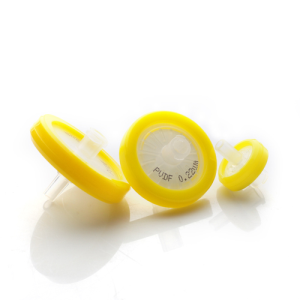
On the other hand, PVDF Membrane Filter is another alternative. PVDF (polyvinylidene fluoride) membranes have high chemical resistance and are suitable for filtering samples with strong solvents or harsh chemicals. They also have good mechanical strength and can withstand higher pressures compared to CA membranes. So, if your biological sample contains aggressive chemicals or if you need to apply high pressure during filtration, PVDF filters could be a better fit.
In conclusion, CA membrane filters can be a great option for many biological sample filtration tasks. They offer low protein binding, high flow rates, and good chemical compatibility. But you need to consider the specific requirements of your biological sample, such as temperature, viscosity, and chemical composition, before making a decision. If your sample is a relatively low - viscosity, protein - rich solution that needs to be filtered at room temperature using common biological buffers, then a CA membrane filter is likely to work well for you.
If you're in the market for membrane filters for your biological samples and think CA membrane filters might be the right choice, or if you want to learn more about other options we offer, don't hesitate to reach out. We're here to help you find the best filtration solution for your specific needs. Whether you're a researcher in a lab, a technician in a biotech company, or someone involved in biological product manufacturing, we can provide you with high - quality CA membrane filters and expert advice.
References:
- General knowledge of membrane filtration in biological research from industry - standard textbooks and research papers.
- Product specifications and technical data provided by membrane filter manufacturers.