


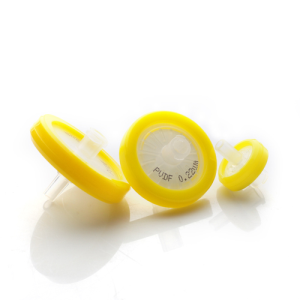


Hey there! As a supplier of lab syringe filters, I often get asked a really interesting question: Can lab syringe filters be used for gas filtration? Let's dive right into this topic and break it down.
First off, let's understand what lab syringe filters are. These little guys are super handy in the lab. They're designed to remove particulate matter from liquid samples as they pass through a porous membrane. You've probably seen them in different materials like nylon, PTFE, and more. For example, the Syringe Filter Nylon is known for its excellent chemical compatibility and mechanical strength, making it a popular choice for filtering various liquid solutions. The 30mm Syringe Filter comes in a specific size that's suitable for a range of applications, depending on how much sample you need to filter. And the Syringe Filter PTFE is great for filtering aggressive solvents and other challenging liquids due to its high chemical resistance.


Now, back to the big question: gas filtration. In theory, some lab syringe filters can be used for gas filtration, but it's not as straightforward as using them for liquids. When it comes to gases, the behavior is quite different from liquids. Gases have much lower viscosity and density compared to liquids. This means that the flow characteristics and the way particles interact with the filter membrane are different.
One of the main factors to consider is the pore size of the filter. For liquid filtration, the pore size is chosen based on the size of the particles you want to remove from the liquid. But for gas filtration, you need to think about the size of the gas molecules and any contaminants present in the gas. If the pore size is too large, it won't effectively filter out small particles or contaminants in the gas. On the other hand, if it's too small, it can cause a significant pressure drop, which might not be ideal for your gas filtration setup.
Another important aspect is the material of the filter membrane. Different materials have different properties when it comes to gas filtration. For example, PTFE is not only great for liquid filtration but also has good hydrophobicity, which can be an advantage when filtering gases that might contain moisture. Nylon, while useful for many liquid applications, might not be the best choice for all gas filtration scenarios, especially if the gas is reactive with nylon.
Let's talk about some of the potential benefits of using lab syringe filters for gas filtration. One major advantage is their convenience. They're small, disposable, and easy to use. You don't need a big, complex filtration system. Just attach the syringe filter to your gas source, and you're good to go. This can be really useful in situations where you need a quick and simple gas filtration solution, like in small-scale experiments or field applications.
However, there are also some limitations. As I mentioned earlier, the pressure drop can be an issue. If the gas flow is restricted too much by the filter, it can affect the performance of your equipment or the accuracy of your experiment. Also, the capacity of lab syringe filters is usually designed for relatively small volumes of liquid. When it comes to gases, if you need to filter a large volume of gas, you might find that the filter gets clogged quickly, and you'll have to replace it frequently.
So, when should you consider using lab syringe filters for gas filtration? Well, if you're working on a small-scale project where you only need to filter a small amount of gas, and you don't need extremely high levels of filtration efficiency, then lab syringe filters can be a great option. For example, if you're doing some basic gas analysis in a research lab and you just want to remove some large particles from the gas sample, a syringe filter can do the job.
On the other hand, if you're dealing with large volumes of gas, or you need very high levels of filtration to remove fine particles or contaminants, you might want to look into more specialized gas filtration systems. These systems are designed specifically for gas filtration and can handle higher flow rates and provide better filtration efficiency.
Now, if you're interested in trying out lab syringe filters for your gas filtration needs, or if you have any questions about which filter is right for your application, I'd love to help. We've got a wide range of syringe filters in different materials, pore sizes, and sizes to suit various requirements. Whether you're a researcher in a university lab, a scientist in a pharmaceutical company, or someone working in a small startup, we can find the right solution for you. Just reach out to us, and we can have a chat about your specific needs and help you make the best choice.
In conclusion, while lab syringe filters can be used for gas filtration in certain situations, it's important to understand their limitations and make an informed decision based on your specific requirements. They offer a convenient and cost-effective option for small-scale gas filtration, but for more demanding applications, you might need to explore other alternatives.
References
- General knowledge of lab filtration techniques and materials
- Industry literature on syringe filters and gas filtration