


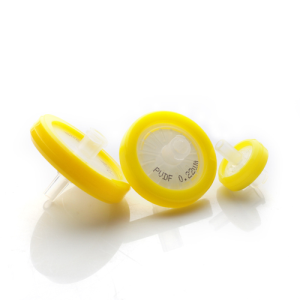


When dealing with the filtration of various substances, choosing the right filter is crucial. As a supplier of Syringe Filter MCE, I often receive inquiries about its applicability in different scenarios. One common question that comes up is: Can Syringe Filter MCE be used for filtering ceramic particles? In this blog, we will delve into this topic, exploring the properties of Syringe Filter MCE, the characteristics of ceramic particles, and the feasibility of using Syringe Filter MCE for this specific filtration task.
Understanding Syringe Filter MCE
Syringe Filter MCE, or Mixed Cellulose Ester syringe filter, is a widely used filtration tool in laboratories and various industries. It is made from a blend of cellulose acetate and cellulose nitrate, which offers several advantages. MCE filters have a hydrophilic nature, which means they can easily wet with water and aqueous solutions. This property makes them suitable for filtering aqueous samples, such as biological fluids, buffers, and aqueous chemical solutions.
The pore size of Syringe Filter MCE can vary, typically ranging from 0.1 µm to 5.0 µm. The choice of pore size depends on the size of the particles that need to be filtered. Smaller pore sizes are used for removing fine particles and microorganisms, while larger pore sizes are suitable for pre - filtration or filtering larger particles.
MCE filters also have good chemical compatibility with a wide range of solvents and chemicals, although they may not be compatible with some strong organic solvents. They are relatively inexpensive and disposable, which makes them convenient for single - use applications, reducing the risk of cross - contamination.
Characteristics of Ceramic Particles
Ceramic particles have unique physical and chemical properties. They are generally hard, wear - resistant, and have high melting points. The size of ceramic particles can vary greatly, from nanometers to millimeters, depending on the manufacturing process and the intended application.
In many cases, ceramic particles are used in industries such as electronics, aerospace, and automotive, where they may be present in slurries, suspensions, or as contaminants in fluids. The shape of ceramic particles can also be irregular, which may affect the filtration process. For example, angular or fibrous ceramic particles may be more likely to clog the filter pores compared to spherical particles.
Feasibility of Using Syringe Filter MCE for Filtering Ceramic Particles
Particle Size Consideration
The first factor to consider when determining if Syringe Filter MCE can be used for filtering ceramic particles is the particle size. If the ceramic particles are larger than the pore size of the MCE filter, the filter can effectively retain the particles. For example, if you have ceramic particles with an average size of 1 µm and you use a Syringe Filter MCE with a pore size of 0.45 µm, the filter should be able to remove most of the particles from the solution.
However, if the ceramic particles are smaller than the pore size of the filter, they will pass through the filter along with the solution. In this case, a filter with a smaller pore size may be required. It's important to note that using a filter with an extremely small pore size may result in a slow filtration rate and increased pressure drop, which can cause the filter to rupture or the filtration process to become inefficient.
Chemical Compatibility
Another important aspect is the chemical compatibility between the ceramic particles and the MCE filter. Most ceramic materials are chemically inert, which means they are unlikely to react with the MCE filter. However, if the ceramic particles are suspended in a solution that contains strong acids, bases, or organic solvents that are not compatible with the MCE filter, the filter may be damaged.
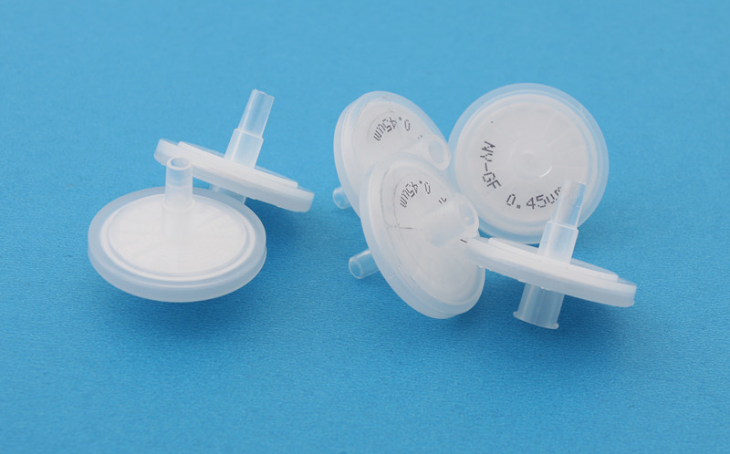

For example, some strong organic solvents can dissolve or swell the MCE filter, leading to a loss of its filtration efficiency. In such cases, alternative filter materials, such as PTFE (Polytetrafluoroethylene) or PVDF (Polyvinylidene Fluoride), may be more suitable.
Filter Clogging
Ceramic particles, especially those with irregular shapes, can cause clogging of the Syringe Filter MCE. As the particles are forced through the filter pores, they may become trapped and accumulate, blocking the flow of the solution. This can lead to a significant decrease in the filtration rate and may require frequent replacement of the filter.
To mitigate the problem of clogging, pre - filtration can be used. Our GF Prefilter Syringe Filter can be used as a pre - filter to remove larger ceramic particles before the solution passes through the Syringe Filter MCE. This can extend the life of the MCE filter and improve the overall filtration efficiency.
Other Considerations and Alternative Filters
In some cases, the flow rate requirements and the volume of the sample to be filtered may also influence the choice of filter. If you need to filter a large volume of solution containing ceramic particles quickly, a Syringe Wheel Filter may be a better option. These filters have a larger surface area, which allows for a higher flow rate.
For applications where a larger diameter filter is needed, our 33mm Syringe Filter can provide a greater filtration area and can handle larger sample volumes.
Conclusion
In summary, Syringe Filter MCE can be used for filtering ceramic particles under certain conditions. If the particle size is appropriate, the chemical compatibility is ensured, and the issue of clogging is addressed, MCE filters can be an effective and cost - efficient solution. However, it's important to carefully evaluate the specific requirements of your filtration task, including particle size, chemical nature of the sample, flow rate, and sample volume.
If you are interested in learning more about our Syringe Filter MCE or other filtration products, or if you have specific filtration needs and want to discuss the best solution for your application, we encourage you to contact us for a detailed consultation. Our team of experts is ready to assist you in making the right choice for your filtration requirements.
References
- "Filtration Principles and Practices" by Christopher D. Hodgson.
- "Ceramics: Science and Technology" by John B. Wachtman.
- Product manuals and technical data sheets of Syringe Filter MCE, GF Prefilter Syringe Filter, Syringe Wheel Filter, and 33mm Syringe Filter.