


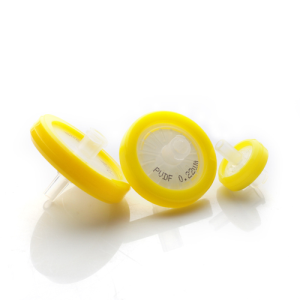


Hey there! I'm a supplier of membrane filters, and I'm super stoked to share with you how these nifty devices work. Membrane filters are like the unsung heroes in a bunch of industries, from water treatment to food and beverage, and even in the pharmaceutical world. They're crucial for getting rid of unwanted particles and making sure products are clean and safe.
So, what exactly is a membrane filter? Well, it's a thin, porous material that acts like a super - fine sieve. Think of it as a net, but way more precise. The pores in the membrane are so tiny that they can trap particles based on their size. The size of these pores is super important because it determines what can pass through and what gets left behind.
Let's dig into the science of how it all goes down. There are a few key principles at play here: sieving, adsorption, and depth filtration.
Sieving
Sieving is probably the most straightforward concept. It's like using a colander to separate pasta from water. In the case of a membrane filter, the pores act as the holes in the colander. Particles that are bigger than the pore size get stuck on the surface of the membrane, while smaller ones can pass through. For example, if you have a membrane filter with a pore size of 0.2 microns, any particle larger than 0.2 microns won't be able to make it through. This is great for removing things like bacteria, which are usually larger than this pore size. It's a very efficient way of separating different - sized particles, and it's one of the main reasons membrane filters are so popular.
Adsorption
Adsorption is a bit more complex. It's all about the attraction between the particles and the surface of the membrane. The membrane has a certain surface chemistry that can cause particles to stick to it. Some particles have a charge or a chemical affinity for the membrane material. For instance, if the membrane has a negative charge on its surface, positively - charged particles will be attracted to it and get stuck. This is useful for removing things like dissolved organic compounds or certain types of viruses that can't be removed just by sieving. Adsorption can help capture particles that are smaller than the pore size of the membrane, adding an extra layer of filtration.
Depth Filtration
Depth filtration is a bit different from sieving and adsorption. In depth filtration, the membrane has a structure where the pores are not just on the surface but throughout the thickness of the material. As the fluid passes through the membrane, particles get trapped at different depths. It's like a maze for the particles. They try to make their way through the membrane, but they keep hitting dead - ends and getting stuck. This is great for removing a large amount of particles, especially when there are a lot of different - sized particles in the fluid. Depth filtration can handle higher particle loads compared to just surface - based sieving.
Now, let's talk about the different types of membrane filters. There are microfiltration membranes, ultrafiltration membranes, nanofiltration membranes, and reverse osmosis membranes. Each type has a different pore size and is used for different applications.
Microfiltration membranes have relatively large pores, usually in the range of 0.1 to 10 microns. They're great for removing larger particles like sediment, algae, and some bacteria. These are often used in pre - filtration steps in water treatment plants or in the food and beverage industry to clarify liquids.
Ultrafiltration membranes have smaller pores, typically between 0.001 and 0.1 microns. They can remove smaller particles like viruses, proteins, and colloids. Ultrafiltration is used in things like dairy processing to separate milk proteins or in the production of pharmaceuticals to purify solutions.
Nanofiltration membranes have even smaller pores, in the range of 0.001 to 0.01 microns. They're good at removing multivalent ions, some organic compounds, and small viruses. Nanofiltration is often used in water softening and in the purification of certain industrial fluids.
Reverse osmosis membranes have the smallest pores of all. They can remove almost everything, including dissolved salts, heavy metals, and very small organic molecules. Reverse osmosis is widely used in desalination plants to turn seawater into fresh water and in the production of high - purity water for the electronics industry.
At our company, we offer a wide range of membrane filters to suit different needs. One of our popular products is the CN Gridded Membrane Filter. This filter has a unique grid pattern on its surface, which makes it easier to count and analyze the particles that get trapped. It's great for applications where you need to do a detailed analysis of the contaminants in a sample, like in environmental monitoring or in quality control in the pharmaceutical industry.
The manufacturing process of membrane filters is also quite interesting. There are a few different methods, but one common way is phase inversion. In phase inversion, a polymer solution is cast onto a support and then immersed in a non - solvent bath. This causes the polymer to precipitate and form a porous structure. The properties of the membrane, like the pore size and porosity, can be controlled by adjusting things like the composition of the polymer solution, the temperature, and the immersion time.
Another method is stretching. In this method, a polymer film is stretched to create pores. The stretching process can be controlled to get the desired pore size and distribution. This method is often used for making membranes with very uniform pore sizes.
When it comes to using membrane filters, there are a few things to keep in mind. One of the main challenges is fouling. Fouling happens when particles build up on the surface or inside the pores of the membrane, reducing its efficiency. This can be caused by things like high particle loads, the presence of sticky substances, or the growth of biofilms. To prevent fouling, regular cleaning and maintenance are essential. There are different cleaning methods, like backwashing, where the flow of fluid is reversed to dislodge the particles, or chemical cleaning, where special cleaning agents are used to break down the fouling layer.
Another important factor is the operating pressure. The pressure needed to force the fluid through the membrane depends on the type of membrane, the pore size, and the viscosity of the fluid. Higher pressures are usually needed for membranes with smaller pore sizes or for more viscous fluids. However, too much pressure can damage the membrane, so it's important to find the right balance.
In conclusion, membrane filters are amazing devices that work based on some really cool scientific principles. They're essential for a wide range of industries, and they help ensure the quality and safety of products. Whether you're in the water treatment business, the food and beverage industry, or the pharmaceutical field, there's a membrane filter that can meet your needs.


If you're interested in learning more about our membrane filters or if you're looking to make a purchase, don't hesitate to reach out. We're here to help you find the perfect solution for your filtration needs. Whether it's the CN Gridded Membrane Filter or any of our other products, we've got you covered. Let's start a conversation and see how we can work together to solve your filtration challenges.
References
- Cheryan, M. (1998). Ultrafiltration and Microfiltration Handbook. Technomic Publishing.
- Porter, M. C. (1997). Handbook of Industrial Membrane Technology. Noyes Publications.
- Mulder, M. (1996). Basic Principles of Membrane Technology. Kluwer Academic Publishers.