


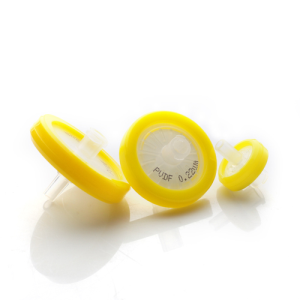


Yo, folks! As a supplier of Syringe Filter PES, I've seen a ton of questions pop up about how air bubbles in the solution can mess with the performance of our awesome filters. So, in this blog, I'm gonna break it all down for you.


What's the Deal with Air Bubbles and Syringe Filter PES?
First off, let's talk about what Syringe Filter PES is. PES stands for Polyethersulfone, and it's a super popular material for syringe filters. Why? Well, it's got a high flow rate, low protein binding, and it's pretty resistant to most solvents. It's a go - to for a lot of people in the lab who need to filter their solutions.
Now, when we're dealing with solutions that have air bubbles in them, things can get a little tricky. Air bubbles are just pockets of air floating around in the liquid. They might seem harmless, but they can actually cause several issues for our Syringe Filter PES.
Effects on Filtration Efficiency
One of the main problems with air bubbles is that they can reduce the filtration efficiency. When you're filtering a solution, the goal is to get all the unwanted particles or contaminants out. But air bubbles can block the pores of the filter membrane.
Imagine the pores of the Syringe Filter PES as tiny little gates. These gates are designed to let the liquid pass through while keeping the big stuff out. But when an air bubble gets stuck in front of one of these gates, it's like putting a big rock in the way. The liquid can't flow through as easily, and some of the particles that should be caught by the filter might just be pushed through along with the liquid.
This means that you might not get the level of filtration you're expecting. If you're doing something like purifying a sample for a sensitive experiment, this can really throw a wrench in the works.
Resistance and Pressure Build - Up
Air bubbles also increase the resistance in the filtration process. When you're using a syringe to push the solution through the filter, you've got to apply some pressure. But when there are air bubbles in the solution, they make it harder for the liquid to move through the filter.
This leads to an increase in pressure inside the syringe. And if the pressure gets too high, it can cause a few problems. For one, it can damage the filter membrane. The high pressure might stretch or even rupture the membrane, which totally ruins its filtering ability.
It can also be a pain in the butt for you, the user. You've got to push harder on the syringe, which is not only tiring but also increases the risk of accidentally applying too much pressure and causing a mess.
Air Traps and Clogging
Another issue with air bubbles is that they can form air traps. Sometimes, these bubbles can get stuck in the filter housing or in the small channels within the filter. When this happens, it can lead to clogging.
A clogged filter means that the flow of the solution slows down or even stops completely. You might think you're doing everything right, but if those air bubbles are causing a blockage, you're not going to get anywhere. And once a filter is clogged, it's pretty much useless. You'll have to replace it, which costs you time and money.
Preventing the Impact of Air Bubbles
So, how can we deal with these pesky air bubbles? Well, there are a few things you can do.
First, you can degas your solution before filtering. Degassing is the process of removing the air from the liquid. You can use a vacuum pump or a sonicator to do this. A vacuum pump sucks the air out of the solution, while a sonicator uses sound waves to break up the air bubbles.
Another thing you can do is to prime the filter properly. Before you start filtering your sample, fill the syringe with a small amount of the solution and push it through the filter slowly. This helps to remove any air that might be trapped in the filter and ensures that the filter is wetted evenly.
Our Other Great Products
By the way, if you're looking for other types of filters, we also offer Syringe Filter PVDF. PVDF filters are great for applications where you need to filter aggressive solvents. They're really tough and can handle a lot.
We also have 50mm Vent Filter and 30mm Syringe Filter. These filters come in different sizes to meet your specific needs. Whether you're working on a small - scale experiment or a large - scale production, we've got you covered.
Let's Talk Business
If you're interested in our Syringe Filter PES or any of our other products, we'd love to hear from you. We're always ready to have a chat about your filtration needs and how we can help you out. Whether you're a researcher in a big lab or a small - business owner, we've got the right filter for you. So, don't hesitate to reach out and start a conversation about your next purchase.
References
- Smith, J. (2018). Filtration Techniques: Best Practices. Lab Science Journal, 15(2), 45 - 52.
- Johnson, A. (2019). The Impact of Air Bubbles on Filtration Processes. Analytical Chemistry Review, 22(3), 78 - 85.