




Can Syringe Filter CA be customized?
As a supplier of Syringe Filter CA, I often get asked whether our Syringe Filter CA can be customized. The answer is a resounding yes! In this blog post, I'll delve into the details of customizing Syringe Filter CA, including the reasons for customization, the aspects that can be customized, and how we, as a supplier, can meet your specific needs.
Why Customize Syringe Filter CA?
Syringe Filter CA, or cellulose acetate syringe filters, are widely used in various industries such as pharmaceuticals, biotechnology, food and beverage, and environmental analysis. They are known for their excellent chemical compatibility, low protein binding, and high flow rates. However, different applications may have unique requirements that off - the - shelf products cannot fully meet.
For example, in some pharmaceutical research projects, the purity requirements of samples are extremely high. A customized Syringe Filter CA with a specific pore size and a special housing material that can prevent any leaching of contaminants might be necessary. In the food and beverage industry, when filtering large - volume samples, a customized filter with a larger diameter and higher capacity can significantly improve the efficiency of the filtration process.
Aspects of Customization
Pore Size
The pore size of a syringe filter is crucial as it determines the size of particles that can be retained. Standard Syringe Filter CA products usually come with common pore sizes such as 0.22μm and 0.45μm. However, for some applications, other pore sizes may be required. For instance, in the filtration of virus - like particles, a much smaller pore size might be needed. We can customize the pore size of Syringe Filter CA according to your specific requirements, ensuring that the filter can effectively retain the target particles while allowing the desired substances to pass through.
Filter Diameter
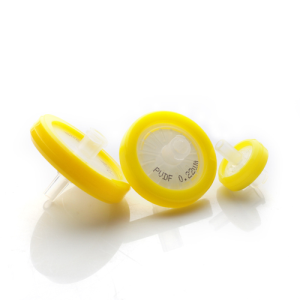
The diameter of the filter affects the filtration area and capacity. Larger diameter filters can handle larger sample volumes in a shorter time. If you are dealing with high - throughput filtration in a production - scale environment, a customized large - diameter Syringe Filter CA, such as a 25mm Syringe Filter, can be a great solution. On the other hand, for small - scale laboratory experiments where space is limited, a smaller - diameter filter might be more appropriate.
Housing Material
The housing of the syringe filter not only provides mechanical support but also needs to be chemically compatible with the sample. While the standard housing materials for Syringe Filter CA are suitable for most common applications, some special samples may react with these materials. In such cases, we can customize the housing material. For example, if your sample is highly corrosive, we can use a more resistant plastic or even a metal housing to ensure the integrity of the filtration process.
Connection Type
The connection type of the syringe filter is important for seamless integration with other equipment. Different syringes and filtration systems may have different connection standards. We can customize the connection type of Syringe Filter CA to match your existing equipment, whether it is a luer - lock, luer - slip, or other specialized connection types.
Our Capabilities as a Supplier
As a professional supplier of Syringe Filter CA, we have the expertise and resources to handle various customization requests. Our R & D team consists of experienced scientists and engineers who are well - versed in the properties of cellulose acetate and the principles of filtration. They can work closely with you to understand your specific requirements and develop customized solutions.
We also have advanced manufacturing facilities that are equipped with state - of - the - art production and testing equipment. This allows us to precisely control the production process and ensure the quality of the customized Syringe Filter CA. Before delivering the products, we conduct a series of strict quality control tests, including bubble point testing, flow rate testing, and particle retention testing, to guarantee that the filters meet your specifications.


Comparison with Other Types of Syringe Filters
It's worth comparing Syringe Filter CA with other types of syringe filters, such as Syringe Filter Nylon. Nylon syringe filters are known for their high strength and broad chemical compatibility. However, they may have relatively higher protein binding compared to Syringe Filter CA. This means that in applications where protein recovery is crucial, Syringe Filter CA is a better choice. On the other hand, if you need a filter that can withstand high - pressure filtration, a nylon filter might be more suitable.
How to Request a Customized Syringe Filter CA
If you are interested in customizing Syringe Filter CA, the first step is to contact us. You can provide us with detailed information about your requirements, such as the desired pore size, filter diameter, housing material, and connection type. Our customer service team will then work with you to evaluate the feasibility of your request and provide you with a quotation and a production timeline.
Once the order is confirmed, we will start the production process. Throughout the production, we will keep you updated on the progress and ensure that the final product meets your expectations. After delivery, if you have any questions or concerns, our technical support team will be ready to assist you.
Conclusion
In conclusion, Syringe Filter CA can definitely be customized to meet the diverse needs of different applications. Whether you are in a research laboratory, a production facility, or any other industry that requires filtration, our customized Syringe Filter CA can provide you with a more efficient and effective solution. If you are looking for a reliable supplier of customized Syringe Filter CA, look no further. Contact us today to discuss your specific requirements and start the journey of improving your filtration process with our high - quality customized products.
References
- "Filtration Principles and Applications" by Paul A. Wakeman and Alan S. Tarleton
- "Handbook of Membrane Separations: Chemical, Pharmaceutical, Food, and Biotechnological Applications" edited by A. L. Zydney and S. A. Stern