


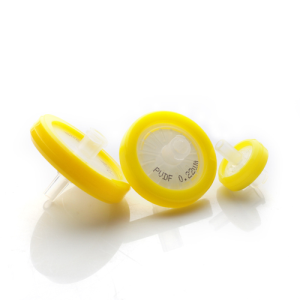


In the realm of laboratory and industrial filtration processes, the choice of an appropriate filter is crucial for achieving optimal results. One common question that arises is whether a 4mm syringe filter can be used for filtering glue solutions. As a supplier of 4mm syringe filters, I'll delve into this topic, exploring the technical aspects, potential challenges, and best practices associated with using these filters for glue solutions.
Understanding 4mm Syringe Filters
Before we discuss their suitability for filtering glue solutions, let's first understand what 4mm syringe filters are. These filters are small, disposable units designed to be attached to a syringe. They are typically used for removing particulate matter, bacteria, and other contaminants from small volumes of liquid samples. The 4mm size refers to the diameter of the filter membrane, which determines the surface area available for filtration and influences the flow rate and filtration capacity.
4mm syringe filters come in various materials, such as polyethersulfone (PES), nylon, polytetrafluoroethylene (PTFE), and cellulose acetate. Each material has its own unique properties, including chemical compatibility, pore size, and hydrophobicity or hydrophilicity. These properties make them suitable for different types of applications and sample matrices.
Glue Solutions: Characteristics and Filtration Requirements
Glue solutions can vary widely in their composition, viscosity, and particle size distribution. They may contain polymers, solvents, fillers, and other additives, which can pose challenges for filtration. The primary goal of filtering glue solutions is to remove any suspended particles, agglomerates, or impurities that could affect the quality and performance of the glue.
The viscosity of glue solutions can range from low to high, depending on the type of glue and its intended use. High - viscosity solutions can be particularly difficult to filter, as they require more pressure to pass through the filter membrane. Additionally, some glue solutions may contain reactive or corrosive components, which can interact with the filter material and cause damage or contamination.
Compatibility of 4mm Syringe Filters with Glue Solutions
The first consideration when using a 4mm syringe filter for filtering glue solutions is the chemical compatibility between the filter material and the glue components. Different filter materials have different resistance to various chemicals. For example, PES filters are generally resistant to many aqueous and organic solvents, making them suitable for a wide range of glue solutions. Nylon filters are also chemically resistant and can be used for filtering glue solutions that contain polar solvents.
On the other hand, PTFE filters are hydrophobic and are ideal for filtering glue solutions that contain non - polar solvents or are water - repellent. Cellulose acetate filters, while hydrophilic, may not be suitable for glue solutions that contain strong solvents or reactive chemicals, as they can be easily dissolved or damaged.
It's important to consult the chemical compatibility chart provided by the filter manufacturer to ensure that the chosen filter material is compatible with the specific glue solution. If the filter material is not compatible, it can lead to leaching of contaminants into the glue, clogging of the filter, or even damage to the filter membrane.
Pore Size Selection
The pore size of the 4mm syringe filter is another critical factor. The pore size determines the size of the particles that can be retained by the filter. For glue solutions, the appropriate pore size depends on the size of the contaminants that need to be removed. If the glue contains large particles or agglomerates, a filter with a larger pore size, such as 0.45 or 0.8 micrometers, may be sufficient. However, if the goal is to remove fine particles or microorganisms, a filter with a smaller pore size, such as 0.2 or 0.1 micrometers, may be required.
It's important to note that using a filter with a very small pore size can increase the filtration time and pressure requirements, especially for high - viscosity glue solutions. Therefore, a balance needs to be struck between the desired level of filtration and the practicality of the filtration process.
Viscosity and Flow Rate
As mentioned earlier, the viscosity of glue solutions can significantly affect the filtration process. High - viscosity glue solutions require more pressure to pass through the filter membrane, which can lead to slower flow rates and potential clogging. To overcome this issue, several strategies can be employed.
One option is to pre - heat the glue solution to reduce its viscosity. However, this approach needs to be carefully evaluated, as heating may also cause changes in the chemical properties of the glue. Another option is to use a filter with a larger surface area or a more open pore structure. For cases where high - viscosity glue solutions need to be filtered, GF Prefilter Syringe Filter can be a good choice. These pre - filters can remove larger particles and agglomerates before the solution reaches the final filter, reducing the load on the 4mm syringe filter and improving the overall filtration efficiency.
Pressure Considerations
When filtering glue solutions with a 4mm syringe filter, it's important to be aware of the pressure limitations of the filter. Excessive pressure can cause the filter membrane to rupture or delaminate, leading to incomplete filtration and potential contamination of the glue. Most 4mm syringe filters are designed to withstand a certain maximum pressure, which is specified by the manufacturer.
If the glue solution has a high viscosity and requires a significant amount of pressure to filter, it may be necessary to use a syringe with a larger diameter or a pressure - assisted filtration device. Additionally, monitoring the pressure during the filtration process can help prevent over - pressurization and ensure the integrity of the filter.
Applications of 4mm Syringe Filters in Glue Filtration
4mm syringe filters can be used in a variety of applications involving glue filtration. In the electronics industry, for example, glue solutions are often used for bonding components. Filtering these glue solutions can help ensure the reliability and performance of electronic devices by removing any particles that could cause short - circuits or other malfunctions.
In the automotive industry, glue solutions are used for various purposes, such as sealing and bonding. Filtration of these glue solutions can improve the quality of the automotive components and prevent issues such as leaks or poor adhesion.


Other Related Filter Products
In addition to 4mm syringe filters, there are other filter products that can be used in conjunction with or as alternatives for filtering glue solutions. The 50mm Vent Filter can be used in larger - scale filtration processes or in applications where a higher flow rate is required. These vent filters are designed to allow air to escape while retaining particles, which can be useful when filtering glue solutions in closed systems.
The 30mm Syringe Filter offers a larger surface area compared to 4mm syringe filters, which can be beneficial for filtering larger volumes of glue solutions or solutions with higher viscosity.
Conclusion
In conclusion, a 4mm syringe filter can be used for filtering glue solutions, but careful consideration must be given to the chemical compatibility, pore size, viscosity, pressure, and other factors. By selecting the appropriate filter material and pore size, and by using the right filtration techniques, it is possible to achieve effective filtration of glue solutions and improve the quality and performance of the glue.
If you are in the market for 4mm syringe filters or other filtration products for your glue filtration needs, we are here to help. Our team of experts can provide you with detailed information and guidance on choosing the most suitable filters for your specific applications. We invite you to contact us for more information and to discuss your procurement requirements. We look forward to working with you to meet your filtration needs.
References
- "Filtration Handbook", Third Edition, by Christopher D. Dickenson.
- Manufacturer's technical data sheets for 4mm syringe filters.
- Industry standards and guidelines for glue filtration in electronics and automotive applications.