


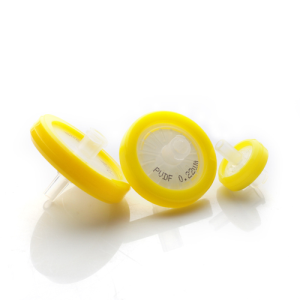


In the realm of food and beverage analysis, the choice of filtration tools is crucial for accurate and reliable results. One such filtration option that often comes under scrutiny is the Syringe Filter MCE (Mixed Cellulose Esters). As a supplier of Syringe Filter MCE, I am frequently asked whether these filters can be used in food and beverage analysis. In this blog post, I will delve into the properties of Syringe Filter MCE, their suitability for food and beverage applications, and compare them with other types of syringe filters.
Properties of Syringe Filter MCE
Syringe Filter MCE is made from a blend of cellulose acetate and cellulose nitrate. This combination results in a filter with excellent hydrophilic properties, meaning it has a high affinity for water. As a result, MCE filters are easily wetted by aqueous solutions, which is a significant advantage in many filtration processes.
The pore size of Syringe Filter MCE can vary, typically ranging from 0.1 µm to 5.0 µm. This allows for the filtration of particles of different sizes, making it suitable for a wide range of applications. The filters also have a relatively high flow rate, which means they can filter large volumes of liquid in a short period.
In addition, Syringe Filter MCE has good chemical compatibility with many solvents and reagents commonly used in food and beverage analysis. However, they are not recommended for use with strong acids, alkalis, and some organic solvents, as these can damage the filter material.
Suitability for Food and Beverage Analysis
The use of Syringe Filter MCE in food and beverage analysis has both advantages and limitations.
Advantages
One of the main advantages of using Syringe Filter MCE in food and beverage analysis is its ability to remove particulate matter. In food and beverage samples, there may be various types of particles, such as sediment, bacteria, and other contaminants. By filtering the samples through an MCE filter, these particles can be effectively removed, ensuring that the analysis is performed on a clean and homogeneous sample.
Another advantage is the hydrophilic nature of the filter. Many food and beverage samples are aqueous-based, and the MCE filter's high affinity for water allows for easy filtration without the need for pre - wetting or special treatment. This simplifies the filtration process and saves time.
Moreover, the relatively high flow rate of Syringe Filter MCE is beneficial when dealing with large - volume samples. In food and beverage industries, it is often necessary to analyze large quantities of samples, and the ability to filter them quickly can increase the efficiency of the analysis process.
Limitations
However, there are also some limitations to using Syringe Filter MCE in food and beverage analysis. As mentioned earlier, the filter has limited chemical compatibility with strong acids, alkalis, and some organic solvents. In food and beverage analysis, there may be a need to use these types of chemicals for sample preparation or analysis. For example, in the determination of certain food additives or contaminants, strong acids or alkalis may be used for hydrolysis or extraction. In such cases, Syringe Filter MCE may not be suitable.


Another limitation is the potential for adsorption of certain analytes. MCE filters may adsorb some compounds, especially hydrophobic substances, onto their surface. This can lead to a loss of the analyte in the sample, resulting in inaccurate analysis results. For example, in the analysis of fat - soluble vitamins or some flavor compounds in food and beverages, the adsorption of these analytes by the MCE filter may affect the accuracy of the measurement.
Comparison with Other Syringe Filters
To better understand the suitability of Syringe Filter MCE in food and beverage analysis, it is useful to compare it with other types of syringe filters, such as Syringe Filter PTFE and Syringe Filter RC.
Syringe Filter PTFE
Syringe Filter PTFE (Polytetrafluoroethylene) is a hydrophobic filter. It has excellent chemical resistance and can withstand strong acids, alkalis, and a wide range of organic solvents. This makes it suitable for applications where the sample contains these types of chemicals. In food and beverage analysis, if the sample preparation involves the use of organic solvents or strong reagents, Syringe Filter PTFE may be a better choice than Syringe Filter MCE. However, because of its hydrophobic nature, PTFE filters need to be pre - wet with an appropriate solvent before filtering aqueous samples, which adds an extra step to the filtration process.
Syringe Filter RC
Syringe Filter RC (Regenerated Cellulose) is also a hydrophilic filter. It has good chemical compatibility with many solvents and a relatively high flow rate. Compared with Syringe Filter MCE, Syringe Filter RC has lower protein binding, which means it is less likely to adsorb proteins and other biomolecules in the sample. In food and beverage analysis, especially when analyzing samples rich in proteins, such as milk or meat extracts, Syringe Filter RC may be a more suitable option as it can reduce the loss of analytes due to adsorption.
Considerations for Using Syringe Filter MCE in Food and Beverage Analysis
When considering using Syringe Filter MCE in food and beverage analysis, several factors need to be taken into account.
Sample Characteristics
The nature of the food or beverage sample is the most important factor. If the sample is aqueous - based and does not contain strong acids, alkalis, or large amounts of hydrophobic substances, Syringe Filter MCE can be a good choice. For example, in the analysis of fruit juices, soft drinks, or water - based food products, MCE filters can effectively remove particulate matter without significant adsorption of analytes.
Analysis Method
The analysis method also plays a role in the choice of filter. If the analysis method requires the use of strong chemicals or involves the detection of hydrophobic analytes, alternative filters such as PTFE or RC may be more appropriate. For example, in gas chromatography or liquid chromatography analysis where organic solvents are used for sample injection, a filter with better chemical compatibility is needed.
Regulatory Requirements
Regulatory requirements in the food and beverage industry are another consideration. Some regulations may specify the type of filtration materials that can be used in the analysis of certain food and beverage products. It is important to ensure that the use of Syringe Filter MCE complies with all relevant regulations.
Conclusion
In conclusion, Syringe Filter MCE can be used in food and beverage analysis under certain conditions. Its hydrophilic nature, relatively high flow rate, and ability to remove particulate matter make it suitable for many aqueous - based food and beverage samples. However, its limited chemical compatibility and potential for analyte adsorption need to be carefully considered. When choosing a syringe filter for food and beverage analysis, it is essential to take into account the sample characteristics, analysis method, and regulatory requirements.
If you are involved in food and beverage analysis and are considering using Syringe Filter MCE or need more information about our syringe filters, we are here to assist you. Our team of experts can provide you with detailed product information and guidance on the most suitable filtration solutions for your specific needs. Contact us to start a procurement discussion and find the best syringe filters for your analysis processes.
References
- ASTM International. Standard test methods for evaluating filtration performance of membrane filters. ASTM D7994 - 15.
- European Food Safety Authority. Guidance on analytical methods for the control of contaminants in food and feed.
- American Public Health Association. Standard methods for the examination of water and wastewater.