


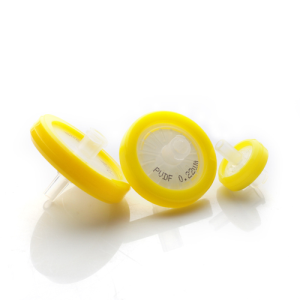


Hey there! As a supplier of 4mm syringe filters, I often get asked whether these little guys have a low protein binding capacity. It's a crucial question, especially for those working in labs or industries where protein integrity is super important. So, let's dive right in and explore this topic.

First off, what's protein binding capacity? Well, in simple terms, it's the amount of protein that a syringe filter can hold onto during the filtration process. When you're filtering a sample that contains proteins, you don't want the filter to trap too much of it. Otherwise, you'll end up with a lower concentration of proteins in your filtered sample than you started with, which can mess up your experiments or processes.
Now, when it comes to 4mm syringe filters, the protein binding capacity can vary depending on a few factors. One of the main factors is the material the filter is made of. Different materials have different affinities for proteins. For example, some materials are more hydrophobic (water - hating), and they tend to bind proteins more strongly because proteins often have hydrophobic regions.
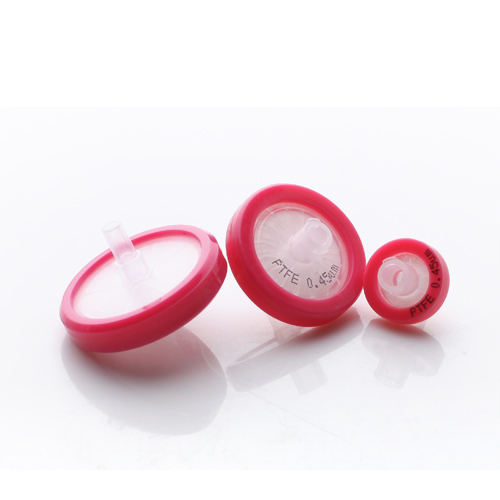
Let's talk about some common materials used in 4mm syringe filters. There's PTFE (Polytetrafluoroethylene). Syringe Filter PTFE is known for its chemical resistance and relatively low protein binding. It's a great choice when you're dealing with samples that are sensitive to protein loss. PTFE has a smooth surface at the molecular level, which means there are fewer places for proteins to stick to.
Another material is cellulose acetate. It's a hydrophilic (water - loving) material, and generally, it has a moderate protein binding capacity. It's often used for aqueous samples because it wets easily and allows for good flow rates.
So, do 4mm syringe filters have a low protein binding capacity? Well, it depends on the material. If you choose a filter made of a low - binding material like PTFE, you're more likely to get a low protein binding capacity. But if you go for a material with a higher affinity for proteins, the binding capacity will be higher.
Size also plays a role. A 4mm syringe filter is relatively small compared to 30mm Syringe Filter or 33mm Syringe Filter. Smaller filters generally have less surface area for proteins to bind to. This means that, all other things being equal, a 4mm filter might have a lower overall protein binding capacity just because there's less space for proteins to attach.
However, it's not just about the size and material. The pore size of the filter is important too. A smaller pore size can increase the likelihood of protein binding because proteins have to squeeze through these tiny holes, and they're more likely to get stuck. On the other hand, a larger pore size might allow proteins to pass through more easily, reducing the binding.
When you're choosing a 4mm syringe filter for a low - protein - binding application, you need to consider the nature of your sample. If your sample has a high protein concentration, you might want to use a filter with an even lower protein binding capacity. You also need to think about the flow rate. Sometimes, filters with very low protein binding might have slower flow rates, which can be a problem if you're in a hurry to filter a large volume of sample.
Let's take a look at some real - world scenarios. In a biotech lab, researchers are often working with protein - rich samples. They might be purifying a specific protein or analyzing its properties. In this case, a 4mm syringe filter with low protein binding is essential. If the filter binds too much of the protein, it can skew the results of their experiments.
In the pharmaceutical industry, when formulating a protein - based drug, the filtration process is crucial. You want to make sure that the active protein ingredient isn't lost during filtration. A 4mm syringe filter with low protein binding can help maintain the integrity and concentration of the protein in the final product.
As a supplier of 4mm syringe filters, I've seen firsthand how important it is to choose the right filter for the job. We offer a range of 4mm syringe filters made from different materials and with different pore sizes to meet the diverse needs of our customers. Whether you're working on a small - scale research project or a large - scale industrial process, we've got a filter that can work for you.
If you're in the market for 4mm syringe filters and you're concerned about protein binding capacity, don't hesitate to reach out. We can help you select the best filter based on your specific requirements. Our team of experts is always ready to answer your questions and provide you with the information you need to make an informed decision.
In conclusion, 4mm syringe filters can have a low protein binding capacity, but it depends on several factors such as the material, pore size, and the nature of the sample. By choosing the right filter, you can ensure that your protein samples remain intact during the filtration process. So, if you're looking for high - quality 4mm syringe filters with the right protein binding characteristics, contact us today to start a conversation about your procurement needs.
References
- Textbooks on laboratory filtration techniques
- Industry research papers on protein binding in syringe filters