


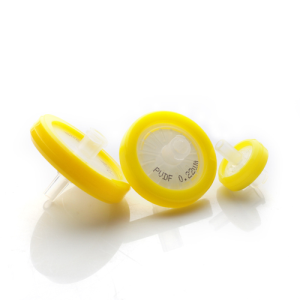


Hey there! As a supplier of Syringe Filter PES, I'm super excited to take you on a journey to understand how these nifty little tools work. Syringe Filter PES, short for Polyethersulfone Syringe Filter, has become a staple in many laboratories and industries. Let's dive right in!
What's Syringe Filter PES All About?
First off, let's get familiar with Syringe Filter PES. You can check out more details about it on our website Syringe Filter PES. This type of filter is designed to be used with syringes. It's disposable, which means you don't have to worry about cleaning it up after each use, making it a convenient and cost - effective option for many applications.
PES is a high - performance polymer. It has some great properties. It's hydrophilic, which means it has an affinity for water. This property is crucial because it allows aqueous solutions to pass through the filter easily without much resistance. Also, it has good chemical compatibility, which means it can handle a wide range of solvents and chemicals without getting damaged.
How Does It Function?
The basic principle behind a Syringe Filter PES is pretty simple. It's all about filtration, separating particles from a liquid or gas. When you use a syringe to push a sample through the filter, the filter membrane acts as a barrier.


Let's break down the process step by step. You have your sample in a syringe. The sample could be anything from a biological fluid in a medical lab to a chemical solution in a research facility. You attach the Syringe Filter PES to the tip of the syringe. The filter has two parts: the housing and the membrane. The housing is usually made of plastic and provides support for the delicate membrane inside.
When you start to push the plunger of the syringe, the liquid (or gas) is forced through the tiny pores in the membrane. These pores are so small that only particles smaller than the pore size can pass through. For example, if you're using a filter with a 0.22 - micron pore size, any particles larger than 0.22 microns will be trapped on the membrane.
The size of the pores can vary depending on your specific needs. If you're trying to remove larger particles, you might use a filter with a bigger pore size, like a few microns. But if you need to remove bacteria or very fine particles, a smaller pore size like 0.1 micron or 0.22 micron is more appropriate.
Applications of Syringe Filter PES
Syringe Filter PES has a wide range of applications. In the pharmaceutical industry, it's used to filter drug solutions before injection. This helps to remove any contaminants that could be harmful to patients. For example, it can remove bacteria or particulate matter that might be present in the manufacturing process.
In the food and beverage industry, these filters are used to clarify liquids. You can use them to remove sediment or unwanted particles from juices, wines, or other beverages. This helps to improve the clarity and quality of the final product.
In environmental testing, Syringe Filter PES is used to filter water samples. Scientists can analyze the filtered water to detect pollutants, heavy metals, or microorganisms. By removing larger particles first, it becomes easier and more accurate to measure the concentration of the pollutants.
In biotechnology, it's used to filter cell culture media. This helps to keep the culture free from contaminants, ensuring the healthy growth of cells.
Different Sizes of Syringe Filter PES
We offer different sizes of Syringe Filter PES to meet various needs. For instance, the 30mm Syringe Filter is great when you need to filter a relatively large volume of sample. It has a larger surface area, which means it can process more sample in less time.
On the other hand, the 4mm Syringe Filter is ideal for small - scale applications or when you have a limited amount of sample. It's more compact and can be used in situations where space is a constraint.
Advantages of Using Syringe Filter PES
One of the biggest advantages of Syringe Filter PES is its ease of use. You don't need any complex equipment or training to use it. Just attach it to your syringe and start pushing the sample through.
Another advantage is its high flow rate. Thanks to the hydrophilic nature of PES, the liquid can pass through the filter quickly. This means you can save a lot of time, especially when you have a large number of samples to filter.
The chemical compatibility of PES is also a huge plus. You can use it with a variety of solvents, acids, and bases without worrying about the filter getting damaged. This makes it a versatile option for different types of applications.
Factors Affecting the Performance of Syringe Filter PES
There are a few factors that can affect how well a Syringe Filter PES works. One of them is the viscosity of the sample. If the sample is very thick or viscous, it might be more difficult to push it through the filter. In such cases, you might need to use a larger pore size or a filter with a higher flow rate.
The pressure applied during the filtration process also matters. If you apply too much pressure, it could damage the filter membrane. On the other hand, if the pressure is too low, the filtration process might be very slow.
The concentration of particles in the sample is another factor. If the sample has a high concentration of particles, the filter might get clogged quickly. In such cases, you might need to pre - filter the sample or use a filter with a larger surface area.
Maintaining and Handling Syringe Filter PES
When it comes to handling Syringe Filter PES, it's important to keep it clean and dry before use. You should also store it in a cool, dry place to prevent any damage to the membrane.
After use, since it's a disposable filter, you should just discard it properly according to the waste disposal regulations in your area. Don't try to reuse it, as this can lead to inaccurate results and contamination.
Why Choose Our Syringe Filter PES?
We take pride in offering high - quality Syringe Filter PES. Our filters are manufactured using strict quality control measures to ensure consistent performance. We also offer a variety of pore sizes and sizes to meet your specific needs.
Whether you're a small research lab or a large industrial facility, we have the right filter for you. Our team is always ready to provide technical support and answer any questions you might have.
If you're interested in purchasing our Syringe Filter PES, we'd love to have a chat with you. You can contact us to start a procurement discussion and find the best solution for your filtration needs.
References
- P. Lane, “Filtration Techniques in the Laboratory,” Elsevier Science Publishing, 2018.
- B. Paul, “Polymeric Membranes for Filtration,” Springer, 2019.
- K. Martinez, “Advances in Syringe Filtration,” Journal of Separation Science, 2021.