


Hey there, folks! I'm a supplier of Syringe Filter CA, and today, I wanna chat about something super important in the filtration world: the effect of flow rate on the filtration performance of Syringe Filter CA.
Understanding Syringe Filter CA
First off, let's quickly go over what Syringe Filter CA is. Syringe Filter CA is a popular choice in many labs and industries. Cellulose acetate (CA) is the key material here. It's known for its low protein binding properties, which means it won't mess with your sample too much. It's also hydrophilic, so it's great for filtering aqueous solutions.
The Role of Flow Rate
Now, let's talk about flow rate. Flow rate is basically how fast the liquid passes through the filter. It's a crucial factor because it can have a big impact on how well the filter works.
Filtration Efficiency
One of the main things affected by flow rate is filtration efficiency. When the flow rate is too high, the filter might not be able to trap all the particles effectively. Think of it like trying to catch a bunch of marbles rolling down a hill really fast. If they're going too quickly, you're more likely to miss some. The same goes for particles in a liquid passing through a filter. At high flow rates, smaller particles might slip through the pores of the Syringe Filter CA without getting trapped.
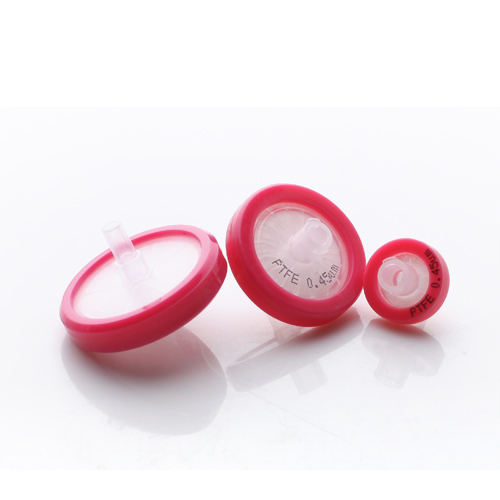

On the other hand, if the flow rate is too low, the filtration process can take forever. This can be a real pain, especially when you have a lot of samples to process. It also increases the chances of the filter getting clogged, as the particles have more time to build up on the surface of the filter.
Particle Retention
Particle retention is another important aspect of filtration performance. The Syringe Filter CA is designed to retain particles of a certain size. The flow rate can affect how well it does this. At a moderate flow rate, the filter can effectively capture the target particles. But if the flow rate is increased significantly, the force of the liquid pushing through the filter can be strong enough to dislodge some of the already trapped particles. This means that the overall particle retention rate can decrease, and your filtered sample might not be as pure as you'd like.
Filter Life
Flow rate also has a big impact on the life of the filter. A high flow rate puts more stress on the filter. The increased pressure can cause the filter material to degrade more quickly. It can also lead to the pores of the filter expanding or getting damaged, which reduces its ability to filter effectively. This means that you'll have to replace the filter more often, which can be costly in the long run.
On the flip side, a very low flow rate can also shorten the filter life. As mentioned earlier, low flow rates can cause the filter to clog more easily. Once the filter is clogged, it can't function properly, and it needs to be replaced.
Finding the Optimal Flow Rate
So, how do you find the optimal flow rate for your Syringe Filter CA? Well, it depends on a few factors.
Sample Characteristics
The type of sample you're filtering plays a big role. If your sample has a high concentration of particles, you might need to use a lower flow rate to ensure effective filtration. On the other hand, if your sample is relatively clean, you might be able to get away with a higher flow rate.
Filter Pore Size
The pore size of the filter also matters. Smaller pore sizes are better at trapping smaller particles, but they also tend to have a lower flow rate. If you're using a filter with a very small pore size, you'll probably need to use a lower flow rate to avoid clogging the filter.
Application Requirements
The specific requirements of your application are also important. If you need a very high level of purity in your filtered sample, you might need to use a lower flow rate to ensure better particle retention. However, if you're in a hurry and can tolerate a slightly lower level of purity, you might be able to increase the flow rate.
Comparing with Other Syringe Filters
It's also interesting to compare the Syringe Filter CA with other types of syringe filters, like Syringe Filter PTFE and Syringe Filter MCE.
PTFE filters are hydrophobic, so they're great for filtering non-aqueous solutions. They can usually handle higher flow rates compared to CA filters, but they also have higher protein binding properties. This means that they might not be the best choice if you're working with protein samples.
MCE filters are made of mixed cellulose esters. They're similar to CA filters in some ways, but they have a different pore structure. They can also have different flow rate and filtration performance characteristics.
Conclusion and Call to Action
In conclusion, the flow rate has a significant effect on the filtration performance of Syringe Filter CA. Finding the right flow rate is crucial for achieving the best results in terms of filtration efficiency, particle retention, and filter life.
If you're in the market for high-quality Syringe Filter CA or any other types of syringe filters, we've got you covered. We offer a wide range of filters to meet your specific needs. Whether you're in a research lab, a pharmaceutical company, or any other industry that requires reliable filtration solutions, we can provide you with the products you need. If you have any questions or want to discuss your filtration requirements, don't hesitate to reach out. We're here to help you make the right choice for your application.
References
- Smith, J. "Filtration Basics: Principles and Practices." Journal of Filtration Science, 2018.
- Johnson, A. "Effect of Flow Rate on Filter Performance." International Journal of Analytical Chemistry, 2020.