


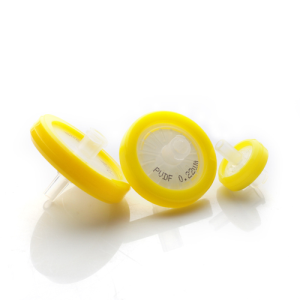


Hey there! As a supplier of Syringe Filter PES, I often get asked about the hydrophilicity of these filters. So, I thought I'd write a blog post to share some insights on this topic.
First off, let's talk about what hydrophilicity means. In simple terms, hydrophilicity refers to the ability of a material to attract and interact with water molecules. A hydrophilic material has an affinity for water, which means it can easily get wet and allow water to spread across its surface. On the other hand, a hydrophobic material repels water and resists wetting.
Now, let's dive into the hydrophilicity of Syringe Filter PES. Polyethersulfone (PES) is a high-performance polymer that is widely used in the manufacturing of syringe filters. One of the key properties of PES is its inherent hydrophilicity. This makes PES syringe filters an excellent choice for filtering aqueous solutions, biological samples, and other water-based liquids.
The hydrophilic nature of PES syringe filters offers several advantages. Firstly, it allows for fast and efficient filtration. Since water can easily wet the filter membrane, the liquid can pass through the filter quickly, reducing the filtration time. This is particularly important when dealing with large volumes of samples or when time is of the essence.
Secondly, the hydrophilicity of PES helps to prevent sample loss and clogging. When a filter is hydrophobic, the liquid may not spread evenly across the membrane, leading to uneven flow and potential blockages. In contrast, the hydrophilic surface of PES syringe filters ensures uniform wetting and flow, minimizing the risk of clogging and ensuring consistent filtration performance.
Another benefit of the hydrophilicity of PES is its compatibility with a wide range of samples. Whether you're filtering proteins, nucleic acids, cell culture media, or other biological samples, PES syringe filters can handle them all. The hydrophilic nature of PES helps to maintain the integrity of the sample by minimizing non-specific binding and protein adsorption. This ensures that the filtered sample remains pure and free from contaminants.
In addition to its excellent hydrophilicity, PES syringe filters also offer other desirable properties. They have high chemical resistance, which means they can withstand exposure to a variety of solvents and chemicals without degrading. This makes them suitable for use in a wide range of applications, including pharmaceutical, biotechnology, and environmental analysis.
PES syringe filters also have a low protein binding capacity, which is important when filtering biological samples. This helps to prevent the loss of valuable proteins and other biomolecules during the filtration process, ensuring accurate and reliable results.
Now, let's compare the hydrophilicity of PES syringe filters with other types of syringe filters. There are several other materials commonly used in the manufacturing of syringe filters, such as nylon, mixed cellulose esters (MCE), and regenerated cellulose (RC).
Syringe Filter Nylon is a popular choice for general-purpose filtration. It has good chemical resistance and is relatively inexpensive. However, nylon is a hydrophobic material, which means it may require pre-wetting with a hydrophilic solvent before use. This can add an extra step to the filtration process and may not be suitable for all applications.
Syringe Filter MCE is another commonly used material. MCE filters are hydrophilic and have a high flow rate. However, they have a relatively low protein binding capacity and may not be suitable for filtering samples with high protein content.
Syringe Filter RC is a hydrophilic material that offers excellent protein binding properties. It is often used for filtering biological samples, such as proteins and nucleic acids. However, RC filters have a relatively low chemical resistance and may not be suitable for use with certain solvents and chemicals.
In conclusion, the hydrophilicity of Syringe Filter PES is one of its key advantages. It allows for fast and efficient filtration, prevents sample loss and clogging, and is compatible with a wide range of samples. When compared to other types of syringe filters, PES offers a unique combination of hydrophilicity, chemical resistance, and low protein binding capacity.
If you're in the market for syringe filters, I highly recommend considering PES filters. They are a reliable and cost-effective solution for a variety of filtration applications. Whether you're working in a research laboratory, a pharmaceutical company, or an environmental testing facility, PES syringe filters can help you achieve accurate and reliable results.
If you have any questions or would like to learn more about our Syringe Filter PES products, please don't hesitate to contact us. We're here to help you find the right filtration solution for your needs. Let's start a conversation and see how we can work together to improve your filtration processes.
References


- "Polyethersulfone Membrane Filters: Properties and Applications" - Journal of Membrane Science
- "Filtration Technology for Biological Samples" - Biotechnology and Bioengineering