


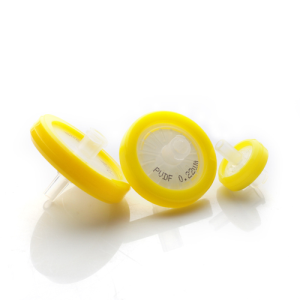


Can a 4mm syringe filter be used for biological samples?
Hey there! As a supplier of 4mm syringe filters, I often get asked whether our 4mm syringe filters can be used for biological samples. Well, let's dive right into it and find out.
First off, what are biological samples? Biological samples can include things like cell cultures, blood, urine, and various types of biological fluids. These samples are often delicate and require special handling to maintain their integrity.
The 4mm syringe filter is a small - sized filter, and it has its own set of advantages and limitations when it comes to filtering biological samples.
Advantages of using a 4mm syringe filter for biological samples
One of the main advantages is its size. The small size makes it very convenient for filtering small volumes of biological samples. If you're working in a lab where you only have a limited amount of sample, say a few milliliters or even less, a 4mm syringe filter is a great choice. It won't waste a lot of your precious sample during the filtering process.
Another plus is its portability. You can easily carry around a 4mm syringe filter in your lab coat pocket or a small kit. This is useful if you need to do some on - the - spot filtering, for example, when you're working in a field research setting or moving between different parts of the lab.
The 4mm syringe filter also provides a good level of filtration. It can effectively remove particles and contaminants from the biological sample. This is crucial because even a small amount of contamination can affect the results of your biological experiments. For instance, in cell culture work, any foreign particles can disrupt the growth and behavior of the cells.
Limitations of using a 4mm syringe filter for biological samples
However, there are also some limitations. One of the biggest drawbacks is the flow rate. Due to its small size, the 4mm syringe filter has a relatively low flow rate compared to larger filters. If you have a large volume of biological sample that needs to be filtered quickly, using a 4mm syringe filter can be very time - consuming. You might find yourself spending a long time pushing the sample through the filter, which can be frustrating, especially when you're on a tight schedule.
Another issue is the capacity. The 4mm syringe filter has a limited capacity to hold the filtered particles. If your biological sample has a high concentration of contaminants, the filter can get clogged quickly. Once the filter is clogged, it not only slows down the filtration process but can also affect the quality of the filtration. You may end up with an incomplete filtration, and some contaminants might still pass through the filter.
Factors to consider when using a 4mm syringe filter for biological samples
When deciding whether to use a 4mm syringe filter for your biological samples, there are several factors you need to take into account.
Sample volume: As mentioned earlier, if you have a small sample volume, a 4mm syringe filter is a good option. But if you have a large volume, you might want to consider using a larger filter. For example, if you're dealing with a 50 - ml sample, a 25mm Syringe Filter or even a 50mm Vent Filter could be more appropriate.


Sample viscosity: The viscosity of the biological sample also matters. If your sample is very thick, like some types of cell lysates, the low flow rate of the 4mm syringe filter can be even more of a problem. You might have to apply a lot of pressure to push the sample through the filter, which can damage the sample or the filter itself.
Type of contaminants: Different biological samples can have different types of contaminants. If your sample contains large particles, the 4mm syringe filter might work well to remove them. But if the contaminants are very small, like certain types of bacteria or viruses, you might need to choose a filter with a smaller pore size. Our Syringe Filter RC offers different pore sizes that can be suitable for different types of contaminants.
In conclusion, a 4mm syringe filter can be used for biological samples, but it's not a one - size - fits - all solution. You need to carefully consider the characteristics of your biological sample and your specific filtering requirements. If you're working with small volumes, and the sample doesn't have a high concentration of contaminants or isn't very viscous, the 4mm syringe filter can be a great choice.
If you're interested in our 4mm syringe filters or other related products, we'd love to have a chat with you about your needs. Whether you're a researcher in a big university lab or a scientist in a small biotech startup, we can provide you with the right filtering solutions. Just reach out to us, and we'll be happy to assist you in your purchasing decisions.
References
- Some general lab manuals on biological sample handling and filtration techniques.
- Research papers on the use of different sized filters in biological research.