


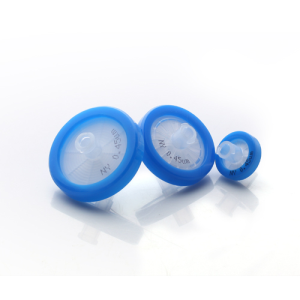
Hey there! As a supplier of 4mm syringe filters, I've seen my fair share of issues that users run into. In this blog, I'll walk you through how to troubleshoot common problems when using a 4mm syringe filter.
1. Low Flow Rate
One of the most common issues is a low flow rate. If you notice that the liquid is passing through the filter very slowly, there could be a few reasons.
Clogging
The most likely culprit is clogging. Particles in the sample can build up on the filter membrane, blocking the pores and reducing the flow. To fix this, you can try pre - filtering your sample. Use a coarser filter to remove the larger particles before passing the sample through the 4mm syringe filter. For example, if you're dealing with a sample that has a lot of visible debris, a 13mm Syringe Filter with a larger pore size can be used as a pre - filter.


Another option is to increase the pressure. You can do this by using a syringe with a smaller diameter. A smaller syringe will allow you to apply more pressure with the same amount of force, pushing the liquid through the filter more quickly. However, be careful not to apply too much pressure as it can damage the filter membrane.
Incorrect Filter Selection
If you've chosen a filter with a pore size that's too small for your sample, it can also cause a low flow rate. Make sure you select the right pore size based on the size of the particles in your sample. If you're filtering a solution with relatively large particles, a filter with a larger pore size will be more appropriate.
2. Leakage
Leakage around the filter can be a real headache. There are a few things that could be causing this problem.
Poor Sealing
Check if the filter is properly attached to the syringe. Sometimes, the filter may not be screwed on tightly enough, causing liquid to leak out from the connection. Unscrew the filter and then re - attach it, making sure to tighten it firmly.
If the filter has an O - ring, inspect it for damage. A damaged O - ring won't create a proper seal, leading to leakage. You may need to replace the O - ring if it's worn out or cracked.
Filter Damage
Inspect the filter body for any cracks or holes. If you find any damage, the filter should be replaced immediately. A damaged filter can't maintain the pressure required for proper filtration and will allow liquid to leak out.
3. Filter Failure
Filter failure can occur when the filter membrane breaks or becomes detached from the filter housing.
Excessive Pressure
As mentioned earlier, applying too much pressure can damage the filter membrane. Make sure you stay within the recommended pressure limits for the 4mm syringe filter. If you need to increase the pressure to achieve a reasonable flow rate, do it gradually.
Chemical Compatibility
Using a filter that's not chemically compatible with your sample can also lead to filter failure. Different filter materials have different chemical resistance properties. For example, if you're filtering a solvent - based sample, a Syringe Filter PVDF may be a better choice as PVDF has good chemical resistance to many solvents. Make sure to check the chemical compatibility chart provided by the filter manufacturer before using the filter with a new sample.
4. Contamination
Contamination of the filtered sample can be a serious issue, especially in applications where purity is crucial.
Improper Handling
Always make sure to handle the filter and syringe in a clean environment. Wash your hands thoroughly before handling the equipment, and use gloves if possible. Avoid touching the filter membrane directly as the oils and dirt on your hands can contaminate the membrane.
Storage Conditions
Store the filters in a clean and dry place. Exposure to dust, moisture, or chemicals can contaminate the filters. Keep the filters in their original packaging until you're ready to use them.
5. Inconsistent Filtration Results
If you're getting inconsistent filtration results, it could be due to a few factors.
Sample Variability
The composition of the sample can vary from one batch to another. Make sure you're consistent in how you prepare the sample. If the sample has a high viscosity, it may affect the filtration process. You can try diluting the sample to reduce its viscosity and improve the filtration consistency.
Filter Aging
Over time, the performance of the filter can degrade. Check the expiration date of the filter and avoid using expired filters. If you notice a significant decrease in the filtration performance over time, it may be time to replace the filter with a new one.
Conclusion
Troubleshooting problems when using a 4mm syringe filter can be a bit of a challenge, but with the right approach, you can quickly identify and fix the issues. By following the tips outlined in this blog, you can ensure that your filtration process runs smoothly and that you get the best results possible.
If you're facing persistent problems or if you're looking to purchase high - quality 4mm syringe filters, feel free to reach out to us. We're here to help you with all your filtration needs and can provide you with expert advice on filter selection and usage. Whether you need a 25mm Syringe Filter for larger volume filtration or a specialized Syringe Filter PVDF for chemical - resistant applications, we've got you covered. Contact us today to start a conversation about your filtration requirements.
References
- Manufacturer's guide for 4mm syringe filters
- Industry standards for syringe filter usage and maintenance