


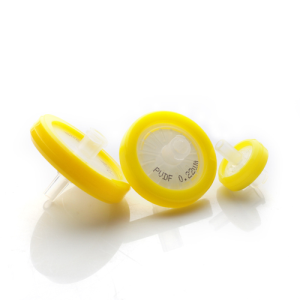


Can CA syringe filters be used in chromatography applications?
As a supplier of CA (Cellulose Acetate) syringe filters, I often encounter inquiries about their suitability for chromatography applications. Chromatography is a powerful analytical technique used in various fields, including pharmaceuticals, environmental science, and food analysis. The choice of filtration method and filter material can significantly impact the accuracy and reliability of chromatographic results. In this blog post, I will explore the potential of CA syringe filters in chromatography applications, discussing their properties, advantages, limitations, and practical considerations.
Properties of CA Syringe Filters
CA syringe filters are made from cellulose acetate, a semi - synthetic polymer derived from cellulose. Cellulose acetate has several properties that make it an attractive material for filtration:
- Hydrophilicity: CA is inherently hydrophilic, which means it has a strong affinity for water. This property allows for easy wetting and fast flow rates when filtering aqueous solutions. In chromatography, where many mobile phases are water - based, the hydrophilic nature of CA filters can be beneficial as it reduces the time required for sample preparation and minimizes the risk of air bubbles in the filtration process.
- Low protein binding: CA has relatively low protein - binding characteristics. This is crucial in chromatography applications, especially when analyzing biological samples such as proteins or peptides. High protein binding can lead to sample loss and inaccurate quantification, while CA filters help to preserve the integrity of the sample by minimizing non - specific adsorption.
- Chemical compatibility: CA is compatible with a wide range of solvents commonly used in chromatography, including water, alcohols, and mild acids and bases. However, it is not suitable for use with strong organic solvents such as acetone, chloroform, or ethyl acetate, which can dissolve or damage the filter membrane.
Advantages of Using CA Syringe Filters in Chromatography
- Sample clarification: One of the primary functions of a syringe filter in chromatography is to remove particulate matter from the sample. CA syringe filters can effectively trap particles such as dust, debris, and microorganisms, preventing them from entering the chromatography system. This helps to protect the column from clogging, which can lead to increased backpressure, reduced column efficiency, and shortened column lifespan.
- Improved chromatographic performance: By removing particulates and impurities, CA syringe filters can improve the quality of the chromatographic separation. Cleaner samples result in sharper peaks, better resolution, and more accurate quantification. This is particularly important in high - performance liquid chromatography (HPLC) and ultra - high - performance liquid chromatography (UHPLC), where small variations in sample quality can have a significant impact on the results.
- Ease of use: Syringe filters are simple and convenient to use. They can be easily attached to a syringe and used to filter small volumes of sample directly before injection into the chromatography system. This makes them ideal for on - site or in - laboratory sample preparation, especially when dealing with limited sample volumes.
Limitations of CA Syringe Filters in Chromatography
- Limited solvent compatibility: As mentioned earlier, CA is not compatible with strong organic solvents. This restricts its use in chromatography applications that require the use of such solvents. For example, in normal - phase chromatography, where non - polar solvents are commonly used, CA filters cannot be used. In such cases, alternative filter materials such as polyethersulfone (PES) Syringe Filter PES or nylon may be more appropriate.
- Temperature sensitivity: CA filters have limited temperature resistance. They can typically withstand temperatures up to around 60 - 70°C. In chromatography applications that involve high - temperature operations, such as some gas chromatography (GC) or high - temperature HPLC methods, CA filters may not be suitable.
- Membrane strength: The membrane of CA syringe filters is relatively fragile compared to some other filter materials. This can make them more prone to damage during handling or when filtering viscous samples. Care must be taken to ensure proper installation and use to avoid membrane rupture, which can lead to sample contamination.
Practical Considerations for Using CA Syringe Filters in Chromatography
- Filter pore size selection: The choice of pore size is an important consideration in chromatography. For most chromatography applications, a pore size of 0.2 µm or 0.45 µm is commonly used. A 0.2 µm filter is more effective at removing smaller particles and microorganisms, while a 0.45 µm filter may be sufficient for general sample clarification. The selection should be based on the nature of the sample and the requirements of the chromatography method.
- Pre - wetting: Before using a CA syringe filter, it is recommended to pre - wet the filter with the mobile phase or a compatible solvent. This helps to ensure proper wetting of the membrane and improves the flow rate. Failure to pre - wet the filter can result in slow filtration and uneven sample flow.
- Filter housing material: In addition to the membrane material, the housing material of the syringe filter can also affect its performance. Common housing materials include polypropylene and polycarbonate. Polypropylene is generally more chemically resistant and is suitable for a wide range of solvents, while polycarbonate may offer better clarity for visual inspection of the filter.
Comparison with Other Syringe Filter Types
There are several other types of syringe filters available on the market, each with its own advantages and disadvantages. For example, PES syringe filters are known for their high flow rates, excellent chemical compatibility with a wide range of solvents, and high mechanical strength. They are often used in applications where high - throughput filtration and compatibility with organic solvents are required. Syringe Filter PES
Nylon syringe filters are also popular due to their broad chemical compatibility, high temperature resistance, and good mechanical properties. They are suitable for both aqueous and organic solvents and can be used in a variety of chromatography applications.
On the other hand, CA syringe filters offer unique advantages in terms of low protein binding and hydrophilicity, making them a preferred choice for biological and aqueous - based chromatography applications.
Conclusion
In conclusion, CA syringe filters can be effectively used in many chromatography applications, especially those involving aqueous samples and mild solvents. Their hydrophilic nature, low protein binding, and ability to clarify samples make them a valuable tool for sample preparation in chromatography. However, their limitations in terms of solvent compatibility, temperature sensitivity, and membrane strength must be carefully considered.


When choosing a syringe filter for chromatography, it is important to evaluate the specific requirements of the application, including the nature of the sample, the type of chromatography method, and the solvents used. In some cases, a combination of different filter types may be necessary to achieve the best results.
If you are interested in learning more about our Syringe Filter CA or other syringe filter products, such as the Syringe Wheel Filter, and would like to discuss your specific chromatography application needs, we encourage you to reach out to us. Our team of experts is ready to assist you in selecting the most suitable filtration solution for your requirements.
References
- Snyder, L. R., Kirkland, J. J., & Glajch, J. L. (1997). Practical HPLC method development. Wiley - Interscience.
- Poole, C. F. (2003). Chromatography today. Elsevier.
- McMaster, M. C. (2006). HPLC: A practical user's guide. Wiley - Interscience.