


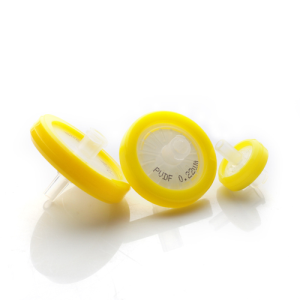


What is the wettability of Syringe Filter PES?
Hey there, folks! As a supplier of Syringe Filter PES, I often get asked about the wettability of these filters. So, I thought I'd take a few minutes to break it down for you.
First off, let's talk about what wettability actually means. In simple terms, wettability is the ability of a liquid to spread and adhere to a solid surface. When it comes to syringe filters, wettability is super important because it affects how well the filter can do its job. If a filter isn't wettable, the liquid won't be able to pass through it easily, which can lead to clogging and reduced filtration efficiency.
Now, let's get into the nitty - gritty of the wettability of Syringe Filter PES. PES, or polyethersulfone, is a type of polymer that's commonly used in syringe filters. One of the great things about PES is that it has excellent wettability, especially with aqueous solutions. When an aqueous liquid comes into contact with a PES syringe filter, it spreads out quickly across the surface of the filter. This is because the chemical structure of PES allows it to interact well with water molecules.
There are a few reasons why the good wettability of PES syringe filters is so beneficial. Firstly, it helps with fast filtration. Since the liquid can spread and pass through the filter easily, the filtration process is much quicker. This is a huge advantage in a lab or industrial setting where time is of the essence. For example, if you're working on a project that requires you to filter multiple samples in a short period, a PES syringe filter with high wettability will save you a ton of time.
Secondly, the good wettability also means better filtration quality. When the liquid spreads evenly across the filter surface, it ensures that all parts of the filter are being utilized for filtration. This results in a more consistent filtration process and better removal of contaminants. Whether you're filtering out particulates or microorganisms, a well - wetted PES filter will do a better job compared to a filter with poor wettability.
Another aspect to consider is the compatibility with different solvents. While PES is great with aqueous solutions, its wettability with organic solvents can vary. Some organic solvents may cause the PES to swell or change its properties slightly, which can affect the wettability. However, in general, PES still shows good performance in a variety of common organic solvents, as long as the solvent is not extremely aggressive.
Now, let me tell you a bit about the different types of syringe filters we offer. We have the 50mm Vent Filter. This is a large - sized filter that's great for applications where you need to filter large volumes of liquid. The wettability of the PES in this filter ensures that it can handle the flow of the liquid efficiently without clogging easily.
We also have the Syringe Filter MCE. While MCE (mixed cellulose ester) is a different material from PES, our customers often compare the two. The PES filter has better wettability in some cases, especially when it comes to long - term filtration and dealing with high - flow rates.
And then there's the 33mm Syringe Filter. This is a popular size for many lab applications. The PES in this filter provides excellent wettability, making it a reliable choice for filtering small to medium volumes of liquid.
If you're in the market for syringe filters, and you need a filter with great wettability, I highly recommend our Syringe Filter PES. Our filters are designed to provide fast, efficient, and high - quality filtration. Whether you're in a research lab, a pharmaceutical company, or an industrial setting, our PES syringe filters can meet your needs.


If you're interested in learning more about our products or want to discuss your specific filtration requirements, just reach out to us. We'd be more than happy to help you find the right syringe filter for your application. And who knows, we might even be able to offer you a great deal. So, don't hesitate to get in touch for a procurement discussion.
References
- "Filtration Principles and Practices", Third Edition, by Phillip C. Wankat
- "Polymeric Membranes for Separation and Purification" by Krzysztof Rogalsk and Tsutomu Nakagawa
- Technical literature on Syringe Filter PES from various industry sources