


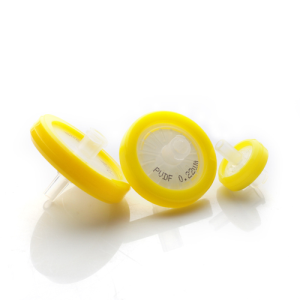


As a supplier of Membrane Filter CA, I've been getting a lot of questions lately about whether this type of membrane filter can be used in textile dyeing filtration. It's a great question, and one that I'm excited to dive into with you all.
Let's first understand what Membrane Filter CA is. Membrane Filter CA, or Cellulose Acetate Membrane Filter, is made from cellulose acetate. It's well - known for its high porosity, low protein binding, and good optical clarity. It's commonly used in various fields such as biology, medicine, and environmental science for filtering, sample preparation, and analysis.
The requirements of textile dyeing filtration
Textile dyeing is a complex process that involves adding color to fabrics. During this process, the dye solution often contains various impurities such as undissolved dye particles, fibers, and other contaminants. The goal of filtration in textile dyeing is to remove these impurities to ensure a smooth dyeing process and high - quality dyed products.
The filtration system in textile dyeing needs to meet several requirements. Firstly, it should have high filtration efficiency to remove even the smallest particles. Secondly, it should be chemically resistant to the dyes and other chemicals used in the dyeing process. Thirdly, it should have a long service life to reduce the frequency of filter replacement and production downtime.
Feasibility of using Membrane Filter CA in textile dyeing filtration
Advantages
- High filtration precision: Membrane Filter CA has a uniform pore size distribution. This means it can effectively filter out particles of a specific size range. In textile dyeing, it can remove fine undissolved dye particles, which helps to prevent uneven dyeing and color spots on the fabric. For example, if the dye solution contains particles larger than the pore size of the membrane, these particles will be trapped on the surface of the membrane, allowing only clean dye solution to pass through.
- Low protein binding: In some cases, the dye solutions may contain protein - based additives or contaminants. Membrane Filter CA has low protein - binding properties, which ensures that these proteins are not adsorbed onto the filter membrane. This helps to maintain the chemical composition of the dye solution and reduces the risk of filter clogging due to protein accumulation.
- Good chemical compatibility: Cellulose acetate is relatively stable in many common textile dyes and chemicals. It can withstand a certain range of pH values and chemical solvents used in the dyeing process. This means that Membrane Filter CA can be used without significant degradation or chemical reaction with the dyeing agents, providing a reliable filtration solution.
Limitations
- Limited chemical resistance: While Membrane Filter CA has good chemical compatibility in many cases, it may not be suitable for all types of dyes and chemicals. Some strong oxidizing agents, concentrated acids, or alkalis can damage the cellulose acetate membrane. For example, in a highly alkaline dyeing process, the membrane may start to dissolve or lose its structural integrity, which will affect its filtration performance.
- Susceptibility to clogging: The fine pores of Membrane Filter CA can easily be clogged by large amounts of impurities in the dye solution. If the dye solution has a high concentration of contaminants, the filter may need to be replaced frequently, which can increase the production cost and downtime.
Comparison with other membrane filters
PTFE Membrane Filter
PTFE (Polytetrafluoroethylene) membrane filters are known for their excellent chemical resistance. They can withstand a wide range of chemicals, including strong acids, alkalis, and organic solvents. In comparison, Membrane Filter CA has more limited chemical resistance. However, PTFE membrane filters are generally more expensive than Membrane Filter CA. Also, PTFE membranes have lower protein - binding properties, but they may not have the same high - porosity characteristics as Membrane Filter CA in some cases.
PES Membrane Filter
PES (Polyethersulfone) membrane filters have high flow rates and good chemical resistance. They are often used in applications where high - volume filtration is required. While PES membrane filters can also be used in textile dyeing, they may have a different pore structure and surface properties compared to Membrane Filter CA. For example, PES membranes may have a higher protein - binding capacity in some situations, which could be a drawback in textile dyeing if the dye solution contains protein - based components.
MCE Membrane Filter
MCE (Mixed Cellulose Ester) membrane filters are similar to Membrane Filter CA in terms of their base material. They are also made from cellulose derivatives. MCE membrane filters have good clarity and are often used for biological and microbiological applications. However, Membrane Filter CA may have better performance in certain chemical environments and may be more suitable for specific types of textile dyes.
Practical applications and considerations
In practical textile dyeing operations, the choice of using Membrane Filter CA depends on several factors. Firstly, the type of dye used is crucial. If the dye is relatively mild and does not contain strong chemicals, Membrane Filter CA can be a good choice due to its high filtration precision and low cost. For example, in natural dyeing processes where plant - based dyes are used, Membrane Filter CA can effectively remove impurities without reacting with the dyes.
Secondly, the concentration of impurities in the dye solution matters. If the dye solution has a low concentration of contaminants, Membrane Filter CA can work well without frequent clogging. However, if the solution is highly contaminated, pre - filtration may be required to reduce the load on the Membrane Filter CA.
Another consideration is the filtration system design. The Membrane Filter CA should be installed correctly in the filtration system to ensure proper flow and pressure. Adequate back - flushing or cleaning procedures should also be established to extend the service life of the filter.
Conclusion
So, can Membrane Filter CA be used in textile dyeing filtration? The answer is yes, but with certain limitations. It has its advantages in terms of high filtration precision, low protein binding, and good chemical compatibility to some extent. However, it may not be suitable for all types of textile dyeing processes, especially those involving strong chemicals or highly contaminated dye solutions.
If you're involved in the textile dyeing industry and are considering using Membrane Filter CA for your filtration needs, I'd be more than happy to discuss the details with you. Whether you're looking for more information about the product, its performance in different scenarios, or need help in choosing the right filter for your specific process, feel free to reach out. Contact us to start a discussion about how Membrane Filter CA can benefit your textile dyeing operations and to explore potential procurement opportunities.


References
- "Textile Dyeing Technology" - Published by a leading industry publishing house
- Research papers on membrane filtration technologies in chemical industries