


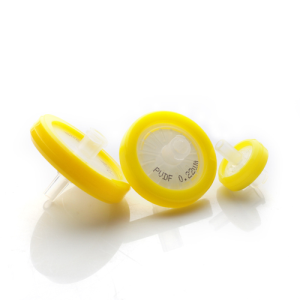


Hey there! I'm a supplier of CA membrane filters, and today I wanna take you on a little journey to explore what these filters are made of.
The Basics of CA Membrane Filters
First off, let's talk about what CA stands for. CA stands for cellulose acetate. Cellulose acetate is a widely - used material in the world of membrane filters. It's derived from cellulose, which is a natural polymer found in the cell walls of plants. You know, plants are like nature's little factories, and cellulose is one of their amazing products.
Cellulose acetate is made by chemically modifying cellulose. The process involves treating cellulose with acetic acid and acetic anhydride in the presence of a catalyst. This chemical reaction replaces some of the hydroxyl groups in cellulose with acetyl groups, resulting in cellulose acetate.
Why Cellulose Acetate?
So, you might be wondering, why do we use cellulose acetate to make membrane filters? Well, there are several reasons.
One of the biggest advantages is its excellent hydrophilicity. Hydrophilic means it has an affinity for water. This property allows CA membrane filters to wet easily with aqueous solutions. When you're filtering a water - based sample, a hydrophilic membrane ensures that the sample can pass through the filter smoothly without any major resistance. This is super important, especially when you're dealing with high - throughput filtration tasks.
Another great thing about cellulose acetate is its low protein binding. In many filtration applications, especially in the biological and pharmaceutical industries, you don't want the filter to bind to proteins in the sample. If the filter binds a significant amount of protein, it can lead to a loss of the target protein in your sample, which is definitely not what you want. CA membrane filters minimize this problem, making them ideal for filtering protein - containing solutions.
CA membrane filters also have good chemical compatibility with a wide range of solvents and reagents. Of course, they have their limitations, but they can handle many common solvents used in laboratories and industrial processes. This versatility makes them suitable for a variety of applications, from simple laboratory filtrations to more complex industrial - scale processes.
The Structure of CA Membrane Filters
The structure of CA membrane filters is another key aspect. These filters are typically made as thin, porous membranes. The pores in the membrane are what allow the separation to occur. The size of the pores can be precisely controlled during the manufacturing process.
Manufacturers use different techniques to create these pores. One common method is phase inversion. In this process, a polymer solution (in this case, a cellulose acetate solution) is cast onto a flat surface. Then, the solvent is removed in a controlled way, causing the polymer to precipitate and form a porous structure. The size and distribution of the pores can be adjusted by changing factors such as the composition of the polymer solution, the temperature, and the rate of solvent evaporation.
The thickness of the CA membrane filter also plays an important role. A thicker membrane might offer more mechanical strength but could also increase the resistance to flow. On the other hand, a thinner membrane might have lower flow resistance but could be more fragile. Manufacturers need to find the right balance to meet the specific requirements of different applications.
Comparing CA Membrane Filters with Other Types
Now, let's compare CA membrane filters with some other popular types of membrane filters. For example, PES Membrane Filter. PES (polyethersulfone) membrane filters are also widely used. PES membranes are known for their high flow rates and excellent thermal and chemical stability. They can withstand higher temperatures and harsher chemical environments compared to CA membrane filters. However, PES membranes tend to have higher protein binding than CA membranes. So, if you're working with protein - sensitive samples, CA might be a better choice.


Then there's the PTFE Membrane Filter. PTFE (polytetrafluoroethylene) is a well - known material for its extreme chemical resistance. PTFE membrane filters can handle some of the most aggressive chemicals, including strong acids and bases. But they are hydrophobic, which means they're not suitable for filtering aqueous solutions without proper pre - wetting. In contrast, CA membrane filters are hydrophilic right out of the box, so they're easier to use with water - based samples.
And let's not forget about Nylon Membrane Filter. Nylon membranes are tough and have good mechanical strength. They can be used for both aqueous and organic solvent filtrations. However, they also have relatively high protein binding compared to CA membrane filters. So, depending on your specific application, you need to weigh the pros and cons of each type of filter.
Applications of CA Membrane Filters
CA membrane filters are used in a wide variety of applications. In the laboratory, they're commonly used for filtering microbiological samples. For example, when you're trying to isolate bacteria or other microorganisms from a liquid sample, a CA membrane filter can trap the microorganisms while allowing the liquid to pass through.
In the pharmaceutical industry, CA membrane filters are used for the clarification and sterilization of drug solutions. They can remove particulate matter and microorganisms from the solutions, ensuring the quality and safety of the final pharmaceutical product.
In the food and beverage industry, CA membrane filters can be used for filtering fruit juices, wines, and other beverages. They can remove suspended solids, yeast, and bacteria, improving the clarity and shelf - life of the products.
How We Make Our CA Membrane Filters
As a supplier of CA membrane filters, we take great pride in our manufacturing process. We start with high - quality cellulose acetate raw materials. We carefully control the chemical modification process to ensure that the cellulose acetate has the right properties for our filters.
During the membrane - casting process, we use state - of - the - art equipment to create membranes with uniform pore sizes and thicknesses. We have strict quality control measures in place at every step of the manufacturing process. We test each batch of filters for pore size, flow rate, protein binding, and other important parameters to make sure they meet our high standards.
Conclusion
So, there you have it! That's a pretty comprehensive look at what CA membrane filters are made of and why they're so useful. As you can see, cellulose acetate is a fantastic material for making membrane filters, thanks to its hydrophilicity, low protein binding, and good chemical compatibility.
If you're in the market for high - quality CA membrane filters, or if you have any questions about our products, don't hesitate to reach out. We're always here to help you find the right filtration solution for your specific needs. Whether you're a small laboratory or a large - scale industrial operation, we can provide you with the filters that meet your requirements. Let's start a conversation and see how we can work together to solve your filtration challenges.
References
- "Membrane Filtration Technology: Principles and Applications" by John Wiley & Sons
- "Cellulose and Cellulose Derivatives: Chemistry, Biotechnology, and Materials Science" edited by Thomas Heinze and Dieter Klemm